Welcome to DesignMechanic: Where Form Meets Physics
Welcome to DesignMechanic (accessible at designmechanic.xyz), an authoritative digital publication, research repository, and educational resource dedicated to the rigorous, multi-disciplinary exploration of Product Design, Industrial Engineering, Sustainable Materials Science, Protective Packaging Mechanics, and Cognitive Human Factors / User Experience (UX).
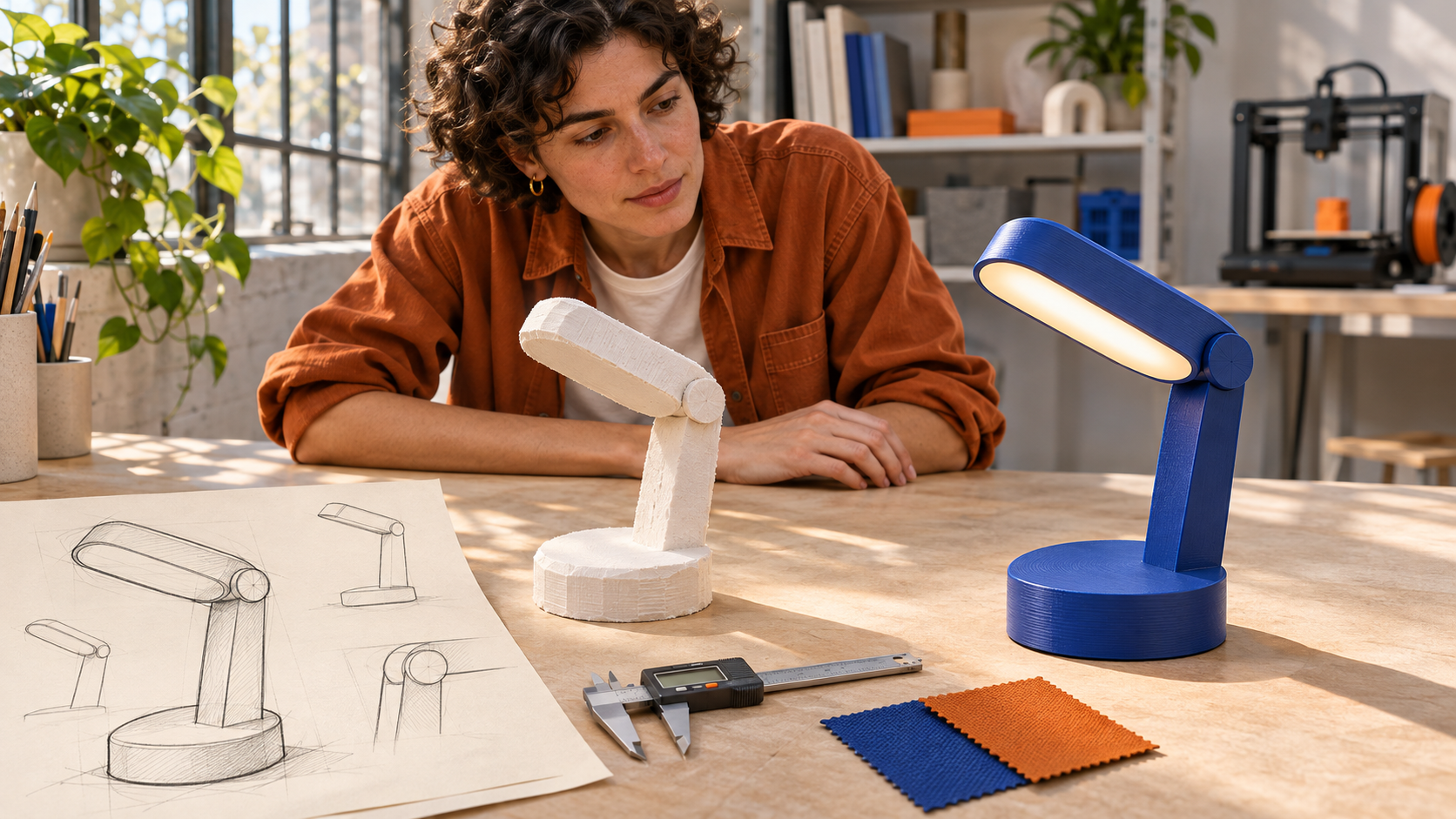
At DesignMechanic, we believe that the physical objects populating human civilization are not accidental commodities. From the sub-micron tungsten carbide ball in a disposable ballpoint pen to the high-pressure die-cast aluminum unibody chassis of modern mobile computers, every manufactured artifact is the tangible crystallization of human ingenuity, mechanical physics, polymer chemistry, and ergonomic empathy. Our mission is to demystify the complex journey of physical creation: dissecting how ideas transform from napkin sketches and 3D CAD solid models into mass-produced, reliable consumer goods that enrich daily life.
⚙️ Our Core Manifesto
‘True innovation is not superficial styling or cosmetic trends; it is the harmonious synthesis of functional utility, material honesty, manufacturing feasibility, and deep psychological resonance. We celebrate the engineers, toolmakers, and industrial architects who build the physical world.’
Our Editorial Mission and Core Principles
In an online media landscape increasingly flooded with superficial product reviews, generic affiliate summaries, and sponsored marketing fluff, DesignMechanic stands apart as an uncompromising sanctuary of in-depth technical analysis and academic-grade industrial education. Our investigative reporting and pedagogical treatises are governed by four foundational pillars:
- Rigorous Technical Depth: We do not gloss over engineering challenges with vague generalities. We delve deep into the mathematics of Edge Crush Testing (ECT) in packaging, the polymer kinetics of injection molding shear rates, the finite element analysis of snap-fits, and the biomechanical kinematics of task seating.
- Material and Ecological Honesty: As humanity confronts global resource constraints and climate emergencies, we hold the manufacturing industry accountable. We champion Circular Design, Cradle-to-Cradle metabolisms, Design for Disassembly (DfD), and bio-fabricated materials while ruthlessly calling out corporate greenwashing and planned obsolescence.
- Human-Centered Empathy: We view technology through the lens of human physiology and cognitive psychology. Following in the intellectual footsteps of Henry Dreyfuss and Don Norman, we believe that any tool causing physical pain, cognitive confusion, or user alienation is an engineering failure.
- Uncompromising Editorial Independence: Our evaluations, case studies, and engineering breakdowns are conducted with complete editorial objectivity, free from corporate advertising influence, sponsored bias, or commercial conflicts of interest.
Our Comprehensive Curriculum and Disciplinary Pillars
DesignMechanic organizes its comprehensive body of knowledge across six core disciplinary pillars:
- Product Design: Exploring foundational design philosophies—from Dieter Rams’s Ten Principles of Good Design and the Bauhaus functionalist heritage to the Stanford d.school Design Thinking methodology and circular product life cycles.
- Product Development: Navigating the high-stakes engineering commercialization pipeline: Stage-Gate frameworks, rapid additive prototyping (SLA, FDM, SLS, DMLS), Boothroyd-Dewhurst Design for Manufacturability and Assembly (DFMA), and Failure Mode and Effects Analysis (FMEA).
- Packaging Design: Deconstructing the invisible protective shields of global logistics: corrugated beam geometry, die-cutting tooling, the psychology of the slow-descent unboxing experience, bio-composites like mycelium foam, and modified atmosphere food preservation barriers.
- Industrial Design: Examining the physical architecture of manufactured goods: anthropometric population percentiles, Ashby material selection charts (thermoplastics vs. die-cast aluminum vs. carbon composites), Mold-Tech surface texturing, and anodization metallurgy.
- User Experience (UX): Investigating the cognitive and biomechanical encounter between humans and machines: Norman affordances and signifiers, tactile haptics of mechanical switches, cognitive load reduction in high-stakes workstations, and Universal Design for aging populations.
- Everyday Product Design: Teardown engineering of the ubiquitous objects that define modern existence: the micro-fluidics of ballpoint pens, epicyclic planetary mixing in kitchen appliances, pneumatic task chair kinematics, and structural fastening mechanics.
Our Editorial Review and Fact-Checking Protocol
To ensure that practicing engineers, industrial design students, and technology leaders receive information of the highest fidelity, every treatise published on DesignMechanic undergoes a multi-tiered verification workflow:
- Primary Literature and Patent Verification: Our authors consult original patent filings (USPTO, EPO), historical engineering archives, and peer-reviewed materials science journals to verify historical chronologies and physical mechanisms.
- Adherence to International Engineering Standards: All technical calculations, testing protocols, and material specifications are benchmarked against internationally recognized standards organizations—including the International Organization for Standardization (ISO), ASTM International, TAPPI (Technical Association of the Pulp and Paper Industry), BIFMA (Business and Institutional Furniture Manufacturers Association), and the German Institute for Standardization (DIN).
- Mathematical and Formula Validation: Engineering equations—ranging from Fick’s laws of diffusion to the McKee box compression formula, beam bending deflection equations, and Hick-Hyman decision latency laws—are reviewed by technical specialists to guarantee dimensional accuracy and mathematical integrity.
Editorial Leadership: Meet Talia Spinka
DesignMechanic is guided by Editor-in-Chief and Principal Industrial Research Lead Talia Spinka.
With an extensive multidisciplinary background in mechanical engineering, human factors ergonomics, and advanced industrial manufacturing, Talia Spinka has spent over a decade researching, documenting, and teaching the intersection of physical hardware architecture and human behavior. Her investigative treatises have explored everything from the fluid dynamics of precision tooling to the cognitive ergonomics of mission-critical control panels.
Talia has collaborated with industrial design studios, hardware accelerators, and university engineering departments across the United States and Europe. Under Talia’s editorial stewardship, DesignMechanic has grown into a respected global educational benchmark, bridging the gap between abstract academic theory and practical factory-floor execution.
Our Studio Workspace and Academic Community
While our digital platform serves an international readership spanning over one hundred nations, DesignMechanic operates a physical research and documentation studio equipped with precision measurement instruments, optical microscopes, material hardness testers, and teardown benches.
We actively collaborate with university professors, industrial design students, practicing packaging technologists, and hardware entrepreneurs. We believe that open, transparent technical knowledge is the lifeblood of technological progress. We invite you to join our growing global community of makers, thinkers, and builders as we explore the enduring wonders of human mechanical creation.